01
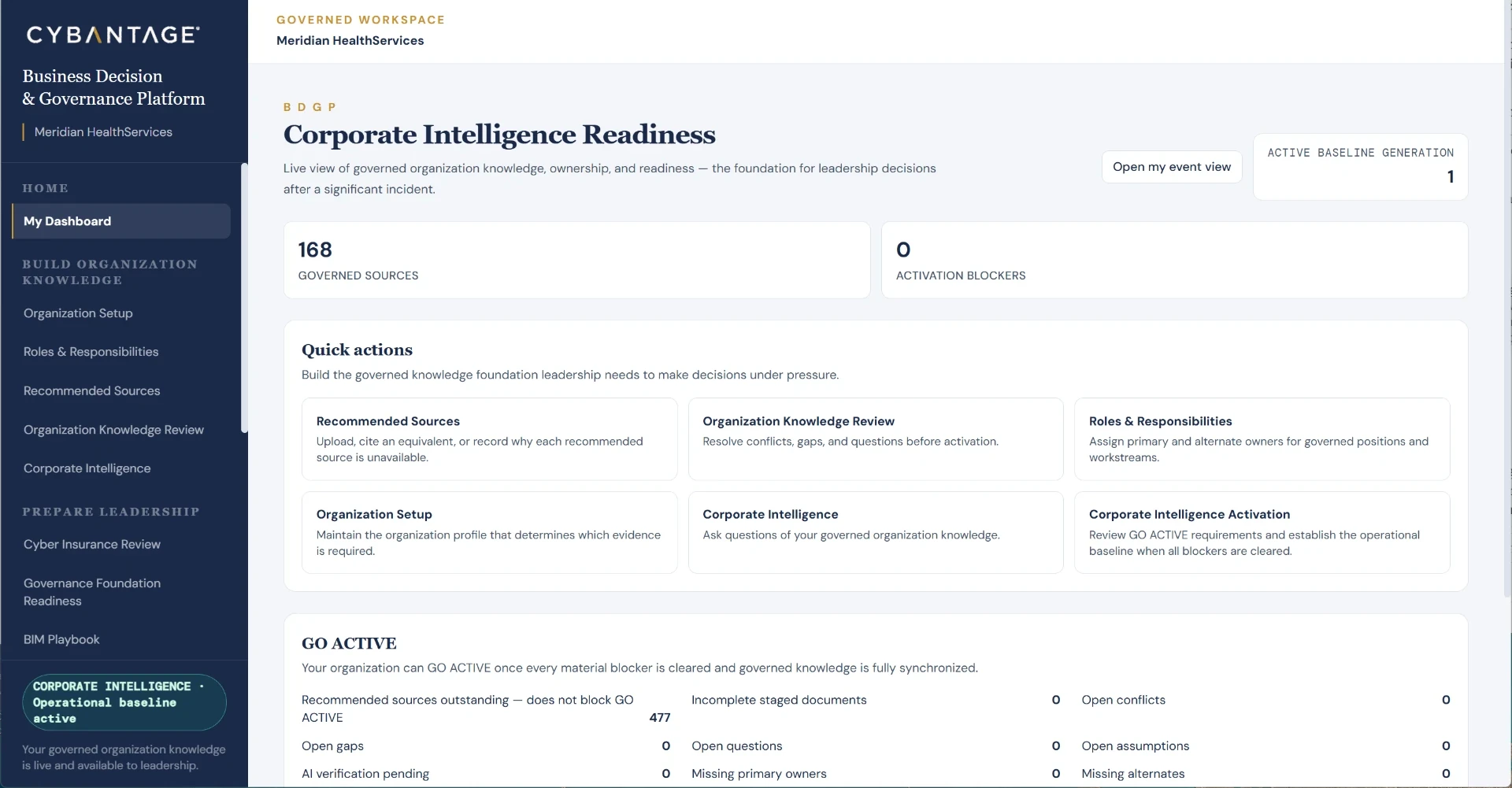
Organizational Intelligence
Company knowledge is scattered across documents and departments.
Bring document ingestion, source-backed knowledge and comparisons into a governed view.
Leadership can examine the basis of an answer, not just find a document.
02
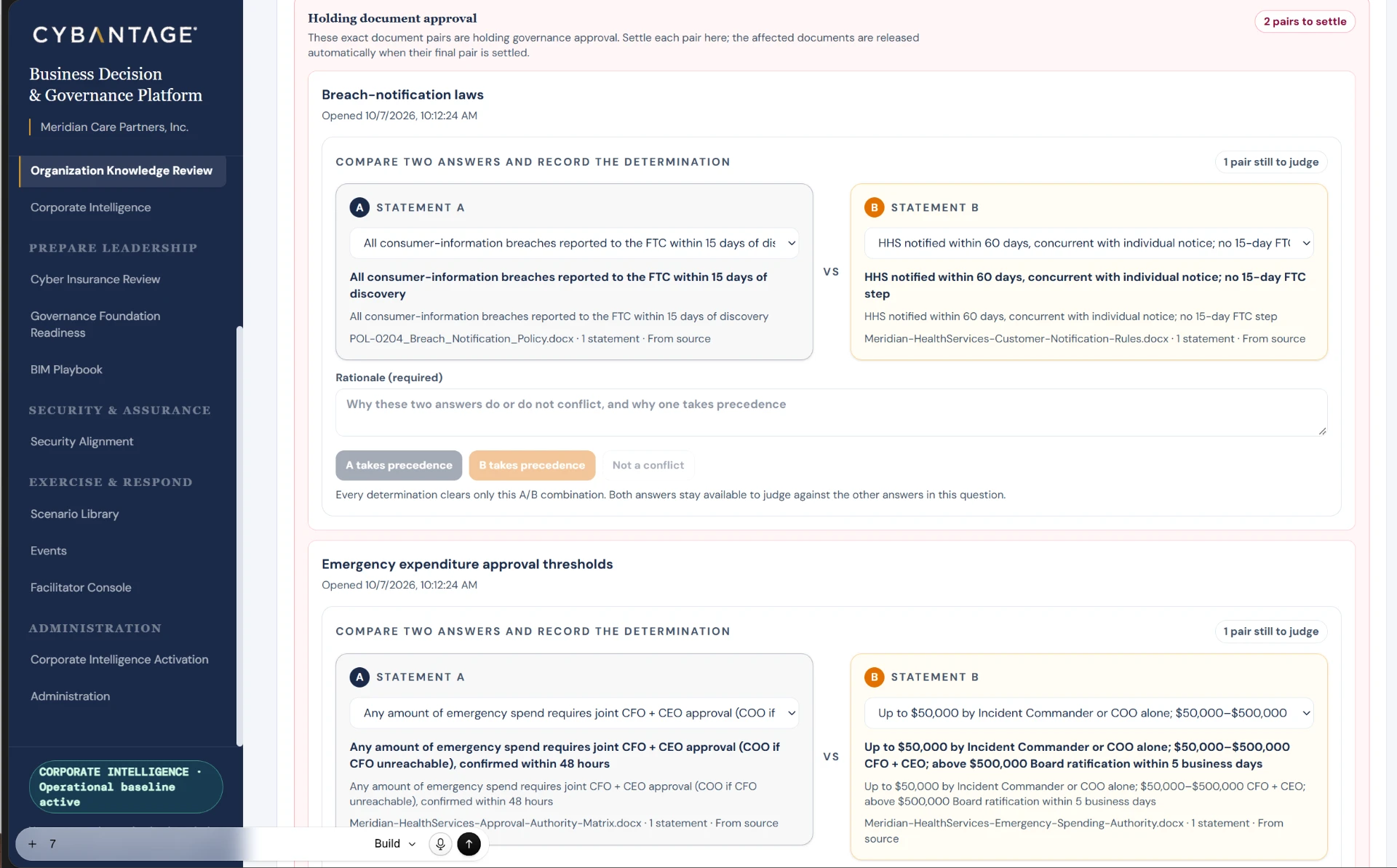
Conflicts and Gaps
Current requirements may disagree, or leave a decision unanswered.
Surface candidate conflicts, missing information and ownership questions for human determination.
Unresolved questions remain visible before leadership relies on them.
03
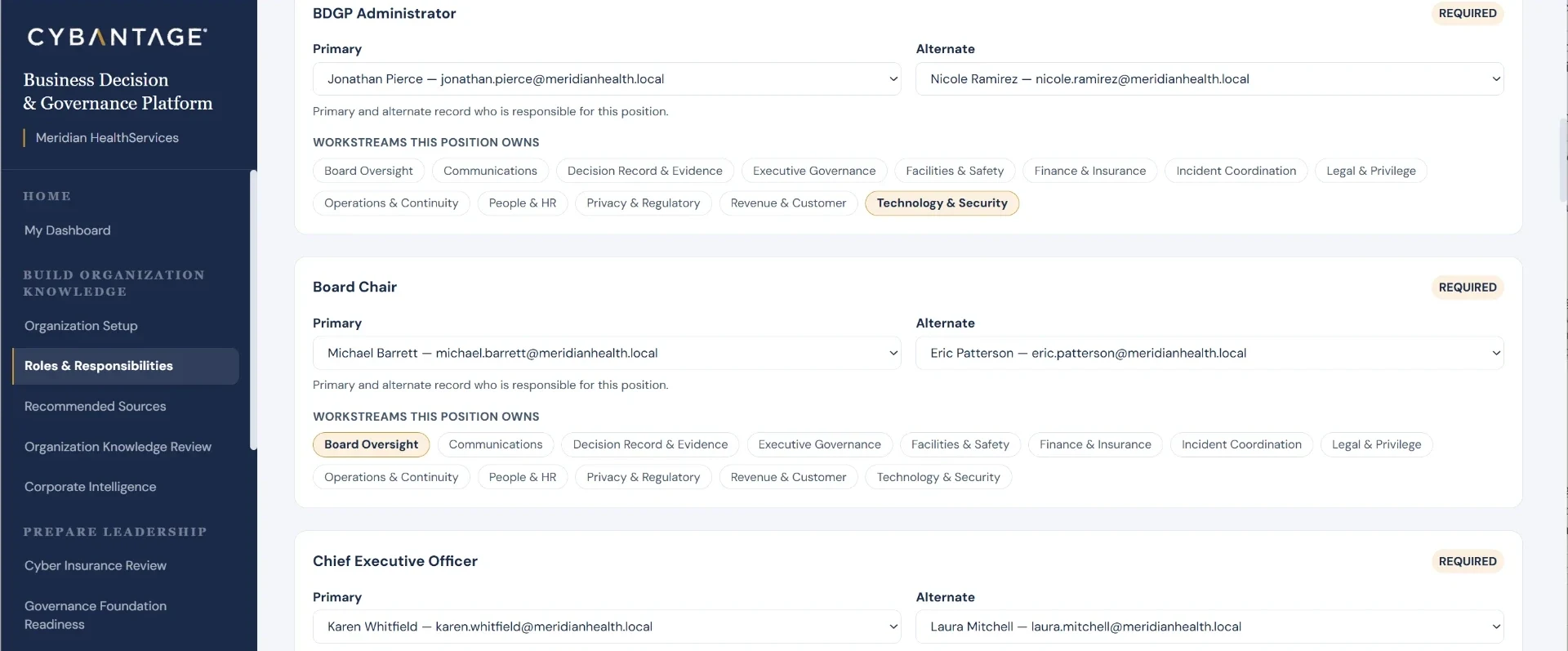
Decision Authority and Continuity
Responsibility can become unclear when roles or executives change.
Review documented authority and named responsibilities. Successor guidance and delegation verification are planned extensions.
People can examine the recorded authority without mistaking software guidance for authorization.
04
Business Consequences
One decision can affect contracts, finance, operations and oversight together.
Compare relevant source-backed requirements and frame cross-functional questions for accountable reviewers.
Leadership can consider obligations and dependencies together; comprehensive legal analysis is not established.
05
Executive Preparation and Guidance
A documented model is useful only if leadership can use it.
Connect governed knowledge to BIM preparation and BIDE exercises. Persistent event-aware conversation and AI Live remain planned.
Executives can prepare and exercise their decision model while understanding the limits of current guidance.
06
Evidence and Accountability
An answer without its source and review history cannot explain its basis.
Preserve source-linked human determinations and approval controls. Expanded event-persistent decision records are planned.
Reviewers can distinguish candidate findings from confirmed knowledge and trace the supporting evidence.