
Demonstrated foundation
See the company knowledge behind a consequential decision.
Cybantage AI Executive Demonstration
Explore source-backed company knowledge, comparisons and human governance review with a clear separation between demonstrated functionality and planned workflows.
Demonstrated foundation · Existing overview
A 60-second overview of the demonstrated foundation
This existing video reflects the earlier incident-governance scope of the demonstrated foundation. It does not demonstrate AI Live, leadership-continuity successor guidance or persistent event-aware conversation; those workflows remain planned and unvalidated.
Demonstration path
Prepare the knowledge. Exercise the decision. Review the evidence.
The demonstration connects company sources to human review. BIM remains the governed output and BIDE the leadership decision exercise methodology.
Prepare
Build governed organization knowledge and the BIM Leadership Decision & Governance Playbook.
Exercise
Test leadership decisions through BIDE — before the event is real.
Review
Review source-linked candidate findings and human determinations; expanded event-persistent decision records are planned.
What it produces
The BIM Leadership Decision & Governance Playbook
The organization-specific operating product. For each consequential decision, the Playbook names the primary owner and alternate, activation triggers, authority, required consultation, insurance dependencies, contractual implications, evidence requirements, and the decision record. Grounded in your organization’s own governed information, with human review of gaps and requirements rather than inferred answers.
Illustrative Playbook section
Operational Continuity & Shutdown Authority
- Primary decision owner
- COO
- Alternate
- CEO
- Required consultation
- General Counsel
- CFO approval
- Above threshold
- Decision record
- Event record, before execution
- Communication approval
- Per Playbook, not improvised
Illustrative example — every Playbook is organization-specific.
One executive decision example
Two approved sources. One unresolved notification decision.
Illustrative source-backed conflicting-requirements exercise: compare two fictional approved documents, inspect each source, and record the accountable human determination. No customer facts are implied.
- Source A — approved notification policy: General Counsel approves external customer notification.
- Source B — approved customer agreement: the account executive must deliver service-impact notice.
- Compare the source versions, named roles and applicable conditions. These are illustrative clauses, not quoted customer records.
- Do approval authority and delivery responsibility differ, or is there a conflicting requirement?
- Which approved source establishes each role?
- What remains unknown or contested?
- Who must determine applicability?
- What rationale and approval should be recorded?
The demonstration follows each candidate requirement back to its source. General Counsel and the accountable executive determine applicability, record their rationale and review approval status; the software does not silently choose an owner or make the decision.
The actual product
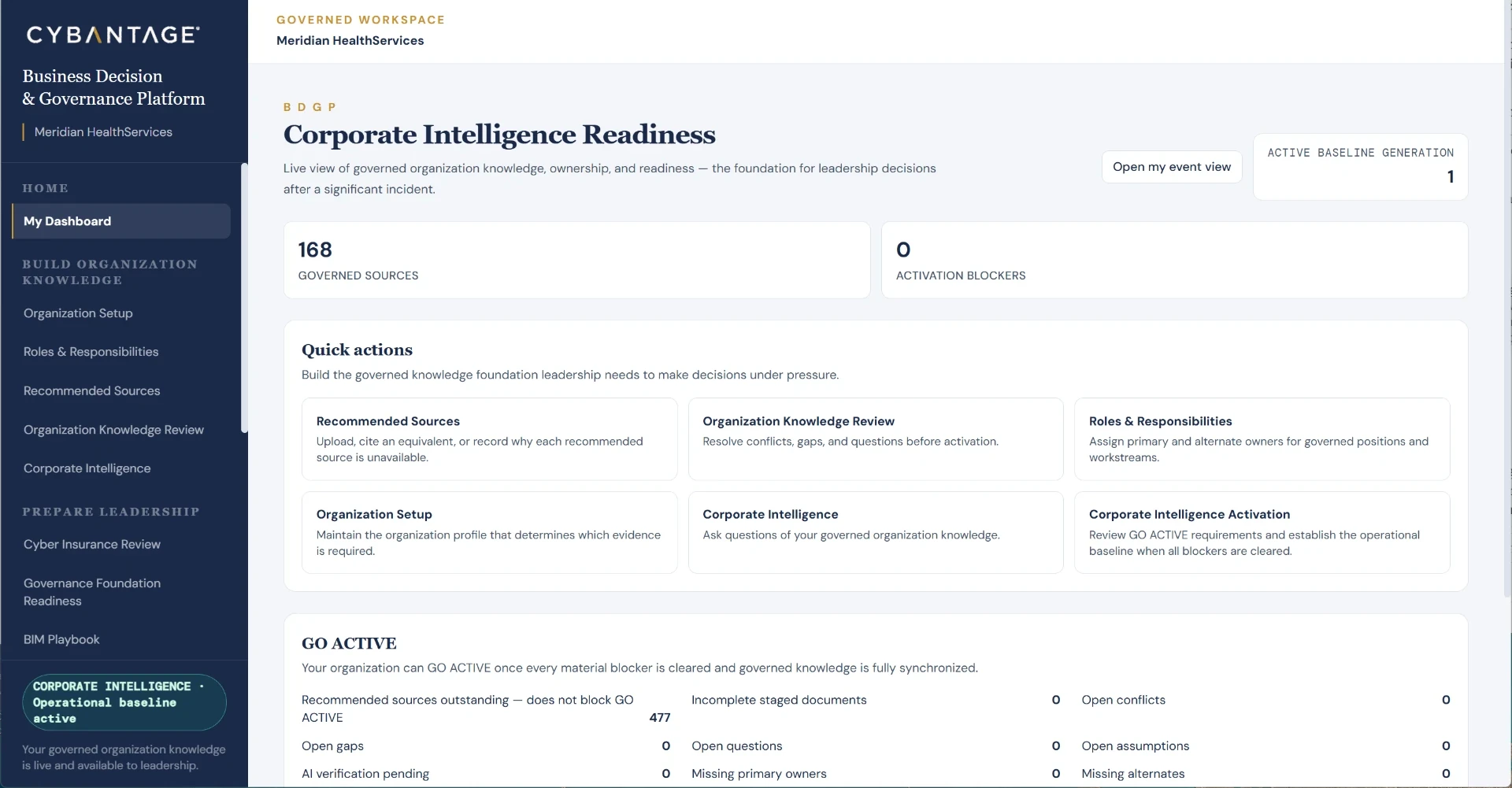
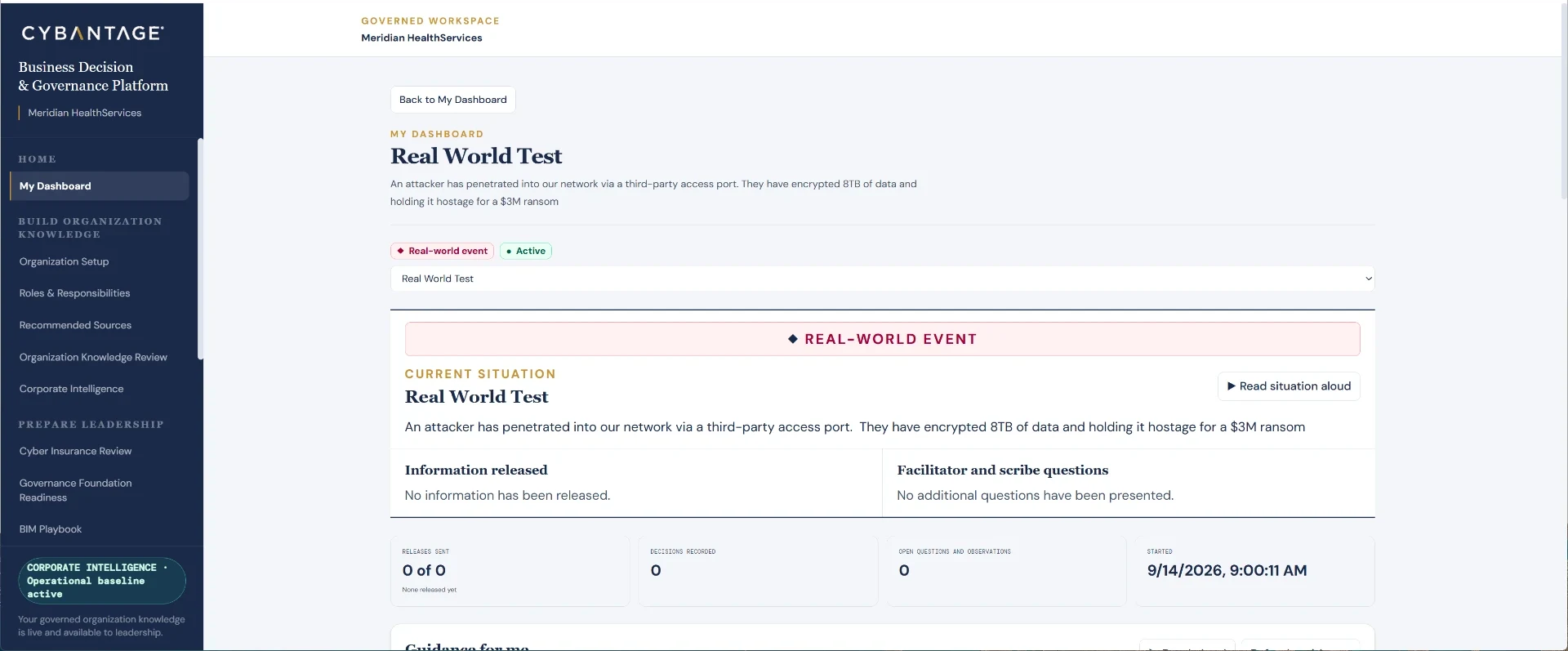
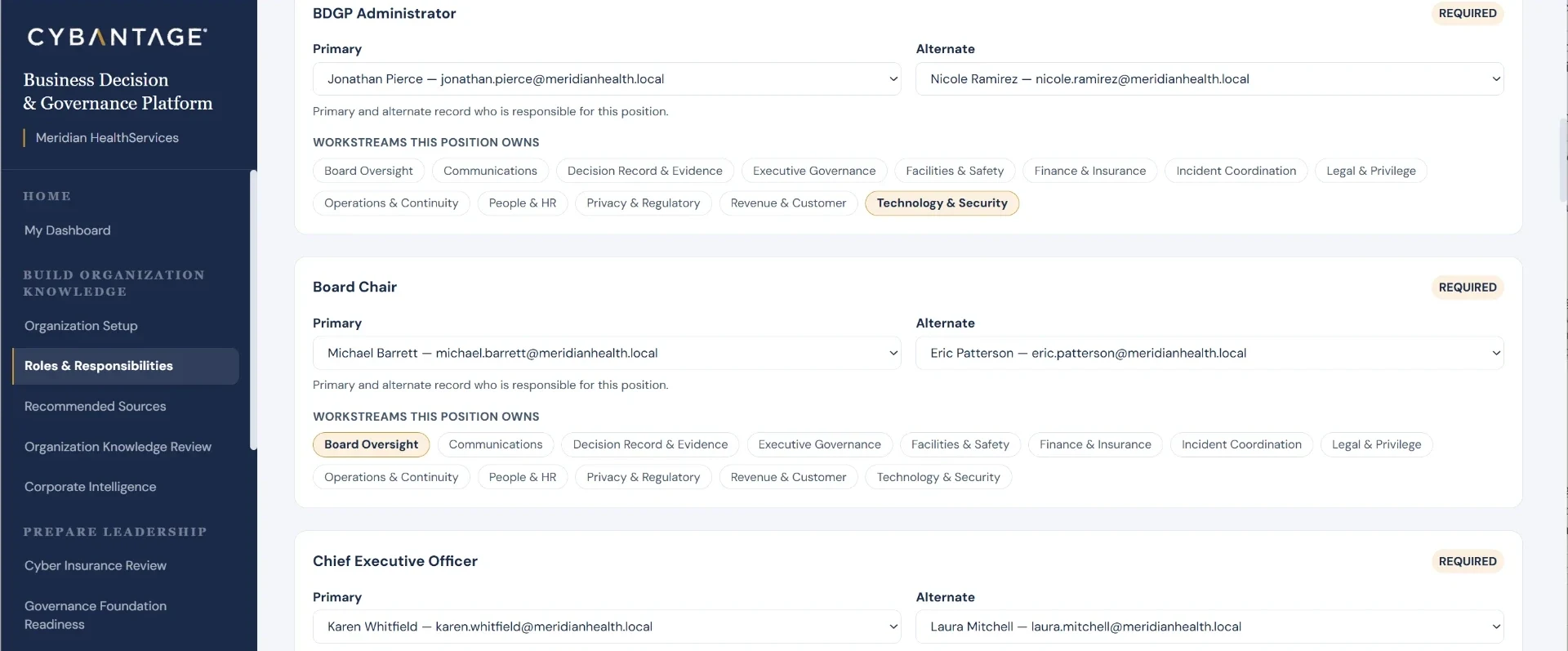
What leadership sees in Cybantage AI
Authentic existing platform screens showing the documented source and authority foundation—not evidence of live meeting intelligence or automated real-world decisions.
Who the demonstration is for
Built for the people accountable for the decision
CEO
Review what the company knows, what remains unresolved, and who is accountable for the decision.
COO
Connect an operational choice to the company sources and required consultations behind it.
CFO
Review documented spending authority and relevant financial or insurance obligations.
General Counsel
Evaluate applicability, conflicting requirements and the basis for human determination.
Next step
See Cybantage AI against your operating environment.
A guided demonstration connects source-linked knowledge and human governance controls to the decisions your leadership team must make.